Dohee Kim's Personal Website
Carbon cycle | Ecology | Biogeochemistry | Forest | Isotope CO2


Where, when, and how does carbon move through the ecosystem?
I answer this across three coupled dimensions
space (above- to belowground), scale (cell to ecosystem), and system boundary (atmosphere–plant–soil–water)
using state-of-the-art stable isotopic (13CO2) techniques to physiological pathways that still misrepresent.

Space:
Above-to-belowground

Scale:
Cell-to-Ecosystem

System:
atmosphere-plant-soil-water
How water availability governs whether a single substrate pool is directed above- or belowground in terrestrial ecosystems.
-
Water-mediated phloem transport as the mechanism reorganizing source–sink connectivity under drought
-
Substrate- versus sink-limited control of growth and respiration shifting with soil moisture status
-
Forest biometrics from canopy to root
-
stable isotope signature of respiration components
Scaling Mesophyll-Level Carbon Pathways to Ecosystem-Scale Interpretation
-
Extending mesophyll conductance parameterization across a broader range of plant functional types and biomes
-
Sharpening direct carbon-pathway tracers (¹³CO₂, COS, SIF, and beyond) to deliver more accurate ecosystem-scale carbon flux estimates
Unify terrestrial to freshwater biogeochemistry into a single atmosphere–plant–soil–water framework
-
Source–sink and redox controls traced continuously from leaf to soil to river sediment
-
A compartment-resolved framework built to inform observation networks and models at regional-to-global scale
Current & Previous projects
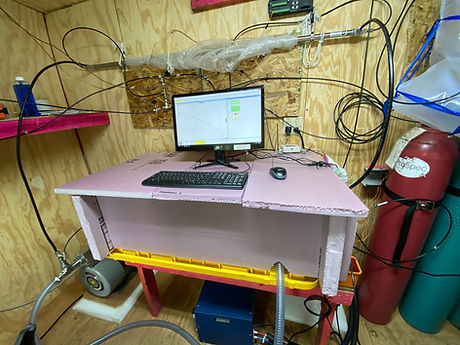
Isotopic flux partitioning: improved understanding to plant physiology to ecosystem scale
This project focuses on isotopic flux partitioning in the southeastern US forest, using state-of-art 13CO2 flux measurements by TILDAS (Tunable Infrared Laser Direst Absorption Spectrometer, Aerodyne). By examining the isotope signature of carbon dioxide at the ecosystem scale, This study aim to understand the uncertainties in current GPP and Reco estimates and improve our understanding to respiration components
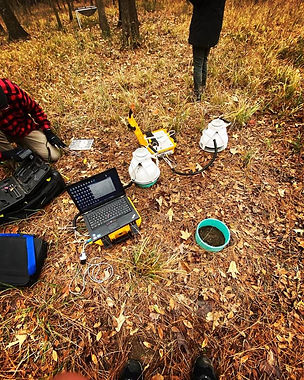
Carbon allocation, asynchrony of above- to belowground phenology, and the role of substrates
Investigating plant metabolic activities both above- and belowground, focusing on biomass productivity and respiration. By assessing the temporal asynchrony between distinct metabolic processes and compartments, This study aims to clarify the roles of assimilates and meteorological drivers in their transport, utilization, and carbon allocation.
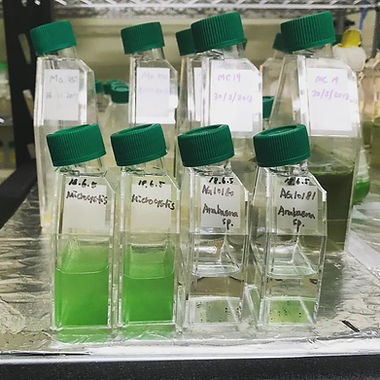
Cyanobacterial Algal Blooms, Biodiversity, and Ecosystem Functioning.
This research focused on the impact of human activity on the species composition of cyanobacteria, their efficiency in using nutrients, and the levels of CO2 produced by algal-derived DOM, using 25 years of long-term monitoring data, manipulation experiments, and monthly field data.

Long-Term Biogeochemical Study of the Carbon Cycle in an Urbanized River System
This project monitors urbanized freshwater in the Han River, Republic of Korea. The main focus was to investigate the effects of anthropogenic pollution on the river system, impact of wastewater treatment plant, with particular emphasis on GHGs and DOM.